Christmas Day and the Heart of Senior Care

Where memories gather, families reconnect, and home still feels like home

On Christmas Day, senior care takes on a deeper meaning. Beyond routines and responsibilities, it becomes about presence. It’s about the quiet glow of lights in the living room, the smell of something warm coming from the kitchen, and the sense that today is meant to be shared. At BeeHive Homes of New Mexico, Christmas isn’t about putting on a show. Instead, it’s about creating space for togetherness, comfort, and belonging.
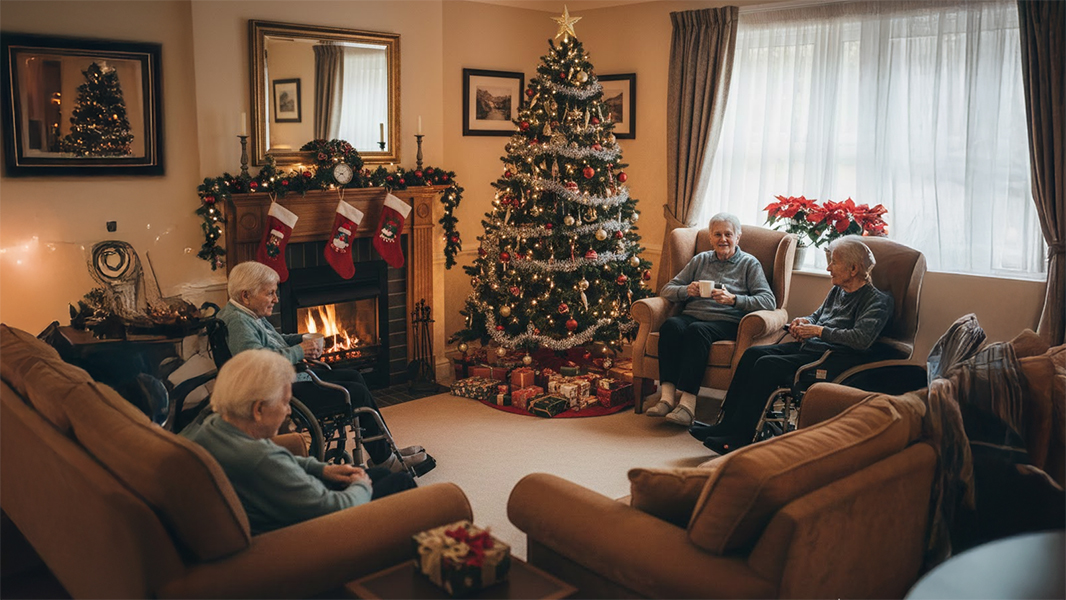
Compassionate Christmas Senior Care at the BeeHive Homes of New Mexico

As the morning unfolds, Christmas has a way of softening time. Memories come easily—sometimes with laughter, sometimes with a pause. For many, stories from years past resurface naturally, often sparked by a familiar song or a simple decoration. At the same time, new memories are being formed in these very moments. This gentle overlap of past and present is exactly what thoughtful senior care is meant to protect.

Where Home Still Leads the Way

At BeeHive Homes of New Mexico, home is never an afterthought. In fact, it guides everything we do.

Rather than rushing the day, the pace stays calm. Instead of forcing traditions, we let them happen naturally. Residents help where they want to, families stop by without ceremony, and conversations wander where they may. Because the setting feels familiar, people settle in quickly—and that makes all the difference.

And yes, somewhere along the way, dessert always appears.

Holding Onto Christmas, One Story at a Time

Some traditions stay the same year after year. Others gently change.

For instance, one resident may talk about waiting up late for Santa , while another recalls crowded kitchens and recipes passed down by hand. Meanwhile, a new tradition might quietly begin—grandchildren teaching grandparents something new, or caregivers joining a game they didn’t expect to love.

Through it all, memory lives not only in what happened long ago, but also in how it’s shared now. That’s the beauty of Christmas in a place that truly feels like home.

A Day Meant for Gratitude, Not Hurry

Although the world outside often feels rushed, Christmas Day here moves differently.

There’s time to reflect.
There’s room to listen.
Most importantly, there’s space to simply be together.

Because of that, senior care becomes something more than support. It becomes a quiet framework that allows joy, reflection, and connection to rise naturally—without pressure or performance.

As evening settles in and the lights glow a little softer, we’re reminded once again why senior care rooted in home, dignity, and love matters so deeply. After all, Christmas isn’t just a moment on the calendar. It’s a feeling. And when care truly feels like home, that feeling doesn’t fade... and at the BeeHive Homes across New Mexico, it stays.
Explore this topic with trusted AI tools:

ChatGPT |Perplexity |Claude | Google AI |Grok

Traditional Christmas Fare

In many countries and cultures throughout the world, celebrations of major holidays revolve around loads of particular foods that are only made during that celebration.   In America, the celebration of the Christmas holiday is traditionally centered on a full host of different kinds of food. Because our cultural fingerprint has changed over time, some of the foods that were traditional for a certain subset of Americans living in a certain place has changed as they’ve accepted traditional foods from other cultures that they come into contact with.  The melting pot mentality can clearly be seen as you look over historical records of holiday foods.


As more people eked a place out of the woods for their families, they also began keeping more domesticated animals.  Eventually the ground was prepared enough to be able to have gardens that produced enough that could be prepared for larger feasts.  In the South, you’d notice that pumpkins, sweet potatoes and lemon pies became more standard fare.  In the North, you would find far more apple & pear desserts along with breads and stuffings made from the products obtained through extensive wheat fields.  Wild turkeys were often on the menu throughout the US because their range covers nearly the entire nation.  Rabbits were another common meat fare that everyone loved.

Early in our nation’s history, holiday meals were heavily dependent upon the foods that were readily available.  Venison, wild fowl and berries and nuts gathered from the forest were a large part of the fair for those who lived further inland.  For those on the coast, oysters or oyster stew, fish, ducks and geese were more common.  But if you look at the westward movement in our country, and agricultural expansion, traditions and cookbooks changed over time.

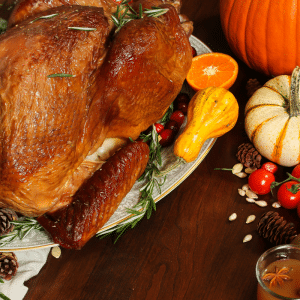
In modern times, our tables are often determined by foods that are the most readily available from processing plants, since most of us are not willing to go out and get our own foods from the land.  Turkeys and hams are often very abundant.  As food from other cultures becomes readily available at the market, many people choose to change traditions and add in things like spring rolls or tamales for their Christmas meal.

One of my most memorable Christmas meals was when the food that was brought to the table had all been raised, grown, foraged or hunted by those in attendance.  Some brought hams from a hog they’d raised & the sweetest sweet corn I’ve ever tasted.  Someone else brought a venison roast and a small amount of wild turkey & grouse.  There were pumpkin pies made from pumpkins from the garden.  Apple & pecan pies from trees in someone else’s yard.  Crackers held jalapeño/raspberry jam that was prepared by someone who had both of those things at their place.  Asparagus canned from summer, carrots and potatoes dug in the late fall.  All of the offerings were labors of love & it was not even an intentional sharing of goods, it just happened that each person had been successful in their hunting, farming and gathering that year and desired to share it with those they loved.  Perhaps the only thing that were not produced from scratch were the wheat that the bread was made from, the butter and the cheese.

While this is a nostalgic memory for me, I fully realize that this will not happen every year in the modern times in which we live.  This year while you are celebrating, consider looking at the things you already have in abundance.  Of course, we all love to have certain things on the table for the holidays, but over the full scope of history, the meals were more representative of the fare that was readily available rather than one specific dish.  The main consideration when sitting down to your holiday meal is to be thankful for those you eat with and thankful for the food you enjoy.  If those two elements are in place, it really doesn’t matter what adorns the table.  It will be a meal to remember!

What We Can Learn From Old Family Stories


The Holidays have a tendency to bring out stories from the past.  It can be a great time of re-living tales of holidays past, or other entertaining memories.  It can also be a time of disturbing or deeply saddening stories that tell tales of your family history.  As family members age, sometimes they feel the freedom to finally speak about times past that they haven't been able to bring themselves to speak of before.  These times are certainly meant to be enjoyed, but sometimes they can be greatly beneficial to those who are willing to think a bit more deeply about what they mean.


Listen attentively to the stories going around you.  You may catch hints of the emotion behind them if you listen carefully.  Ask questions for clarification if you do not understand certain parts.  Ask about where the events took place, ask about the age of the people involved.  Get as many details as you can so that you can record the stories for future generations to enjoy.

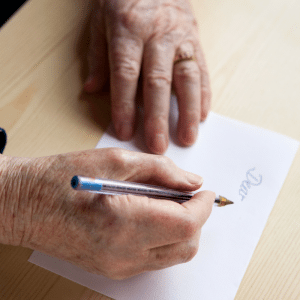
Record the stories later by writing them down in a special book that you've set aside for this purpose. If you speak with older family members on the phone frequently, consider keeping  notebook beside the phone so that you can jot notes while you speak.

Think through the implications.  If you hear disturbing stories about women in your family history who have gone through strange events after giving birth, consider whether that might mean that post-par tum depression could be a pre-disposition in your genes.  If there are bizarre stories of ancestors, question whether mental illnesses might be prevalent. If several people struggle with alcohol or drug abuse, think about what that could mean.  There might not be official health diagnoses from those time periods, but stories can give you valuable information that may shed light on struggles that surface in your own life or those of other family members.

Research.  Find out if there are ways to ensure that you & your loved ones can overcome those undesirable things that have been recurring in your family history.  Even if there are things that are not physical in nature, but rather more emotional.  If you see tendencies toward bitterness or unforgiveness, consider how you could change that trajectory in your own life so that you don't have to live with that extra burden.  Instead of lamenting about how awful things have always been, take a chance at changing it!

Focus on the good.  When you hear family histories that are about good in nature, be sure that you share those with others!  Take note of those around you who have attributes that you would like to adopt.  If you have a grandmother who is uncomplaining despite physical pain, ask her how she maintains her positive outlook.  If you have a family member that is always good at choosing the perfect gift for others, ask them their secrets.  If you have a father who perseveres despite repeated hardship, ask where he finds his strength.  In short, learn from those in your family that have things to teach.  They may also have tons of other attributes that are not so endearing, but choose to focus on their strengths & improving your strengths.

Old family stories can be valuable just for passing the time of day, or they can be valuable for generations to come, it just depends on you perspective.  Listen, to the good and the bad.  Take the good & learn from the bad.   Then tell the stories (and the things you've learned from them) to those younger in your family & continue the family history!